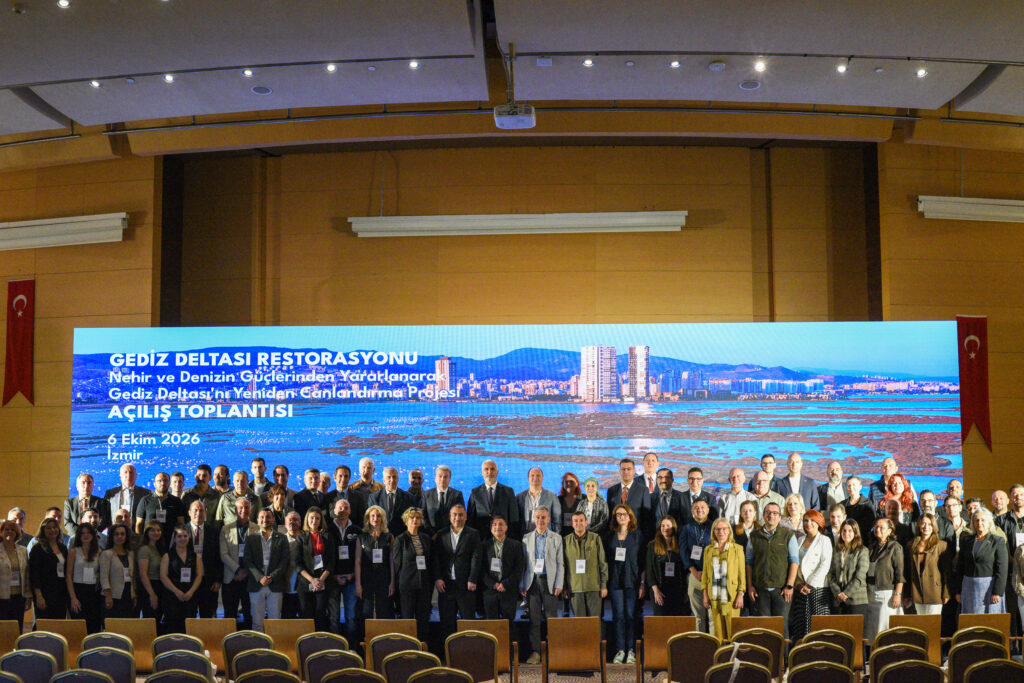
Akdeniz Havzası’nın önemli sulak alanlarından biri olan Gediz Deltası’nın, ekosistem bütünlüğünü ve biyoçeşitliliğini korumak amacıyla 5 yıl sürecek restorasyon ve canlandırma projesi başladı.
Carried out through a partnership between the General Directorate of Nature Conservation and National Parks (DKMP) and Doğa Derneği, in collaboration with international project partners BirdLife Europe and Central Asia and Tour du Valat, the project is implemented with the financial support of the Endangered Landscapes and Seascapes Programme (ELSP). The opening and launch meeting of the "Harnessing the forces of river and sea to restore a living Gediz Delta." took place on Tuesday, October 6, 2026, in İzmir. “Nehir ve Denizin Güçlerinden Yararlanarak Gediz Deltası’nı Yeniden Canlandırmak Projesi”nin açılış ve lansman toplantısı, 6 Ekim 2026 Salı günü İzmir’de gerçekleştirildi.
İzmir Vali Yardımcısı Sayın Erkan Karahan, Doğa Koruma ve Milli Parklar Genel Müdürlüğü Sulak Alanlar Daire Başkanı Mehmet Özdemir ve 4. Bölge Müdürü Kerim Gençoğlu, kamu kurum ve kuruluşlarının üst düzey yetkilileri, akademisyenler ile sivil toplum kuruluşları temsilcilerinin katılımıyla düzenlenen toplantıda; Gediz Deltası’nın geleceğine yönelik restorasyon yaklaşımı, hedefleri ve 2026-2031 yılları arasında yürütülecek 5 yıllık çalışma planı kamuoyuyla paylaşıldı.
Gediz Delta Hosts 10% of the World’s Flamingo Population
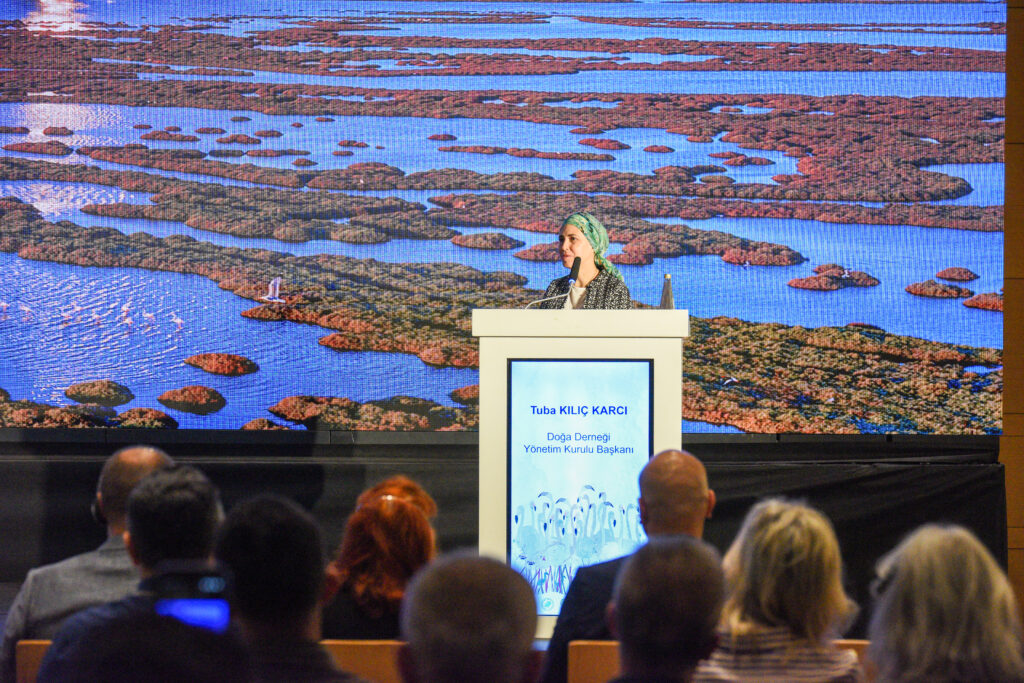
Prominent for its coastal lagoons (dalyans), saline meadows, reed beds, lagoons, agricultural lands, and traditional production methods, the Gediz Delta serves as a breeding ground for 10% of the global flamingo population, hosting approximately 20,000 pairs of flamingos each year. Home to one of the largest colonies of Dalmatian pelicans and terns in the Mediterranean, the region acts as a critical wintering, staging, and breeding sanctuary for tens of thousands of waterbirds. The delta maintains its existence integrated with the city's economy and social life through small-scale coastal fishing, traditional livestock farming, and an annual salt production of approximately half a million tons.
Gediz Delta to Be Strengthened Within the Scope of the Project
To conserve biodiversity in freshwater areas and secure the future of ecosystems, various interventions will be implemented—ranging from solar-powered water management applications to ecologically based pasture and meadow management. Among the key actions of the project are transforming existing barriers into ecological weirs that allow fish to migrate easily in order to strengthen the natural flow of rivers, restoring the flamingo island, and creating artificial breeding platforms for waterbirds.
The project aims to reduce a major threat in the delta by undergrounding sections of power lines that obstruct bird movements between breeding and feeding grounds, causing numerous deaths and injuries each year. Furthermore, economic models and practices supporting rural development will be established, and ecotourism activities will be promoted to foster a stronger connection between visitors and nature. In this context, the restoration of the Visitor Center located in the delta is also planned, transforming it into a facility that visitors and students can utilize more actively.
This comprehensive ecological restoration work, which will continue until 2031 to ensure the ecological integrity of the Gediz Delta, will be driven not only by the project team but also with contributions from over 15 experts from various disciplines, academics, public institutions, and civil society organizations.