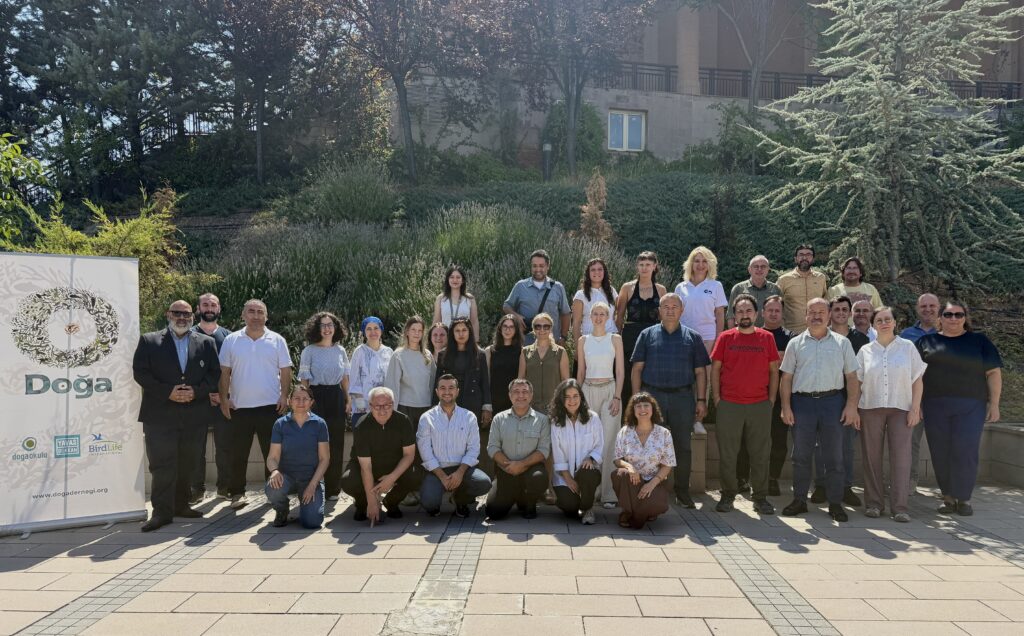
The launch of the update process for the Key Biodiversity Areas (KBA) inventory of Turkey, a critical framework developed to identify and protect priority conservation areas, first published by Doğa Derneği in 2006, was announced 20 years later at the workshop in Ankara.
Bringing together representatives from 12 civil society organizations, academics from 11 universities, and experts from three general directorates of the Ministry of Agriculture and Forestry, the workshop marked the start of collaborative efforts. Discussions focused on integrating updated data into Turkey’s conservation policies, employing KBA data against emerging threats, and establishing effective mechanisms for academic-public-NGO cooperation.
KBAs cover vital habitats housing sensitive ecosystems, endemic species, and threatened fauna and flora, enabling the implementation of global biodiversity standards and the development of targeted conservation strategies. The initial 2006 inventory synthesized data across plants, damselflies, butterflies, freshwater fish, amphibians, reptiles, birds, and mammals to define 305 KBAs across Turkey.
Initiated under the coordination of Doğa Derneği in 2023 and slated for completion in 2029, the update project will scientifically document the ecological shifts, biodiversity losses, and promising new discoveries in Turkey over the past two decades.
Joint Effort by Academics and Experts from Turkey and Europe
The KBA approach was officially adopted by the International Union for Conservation of Nature (IUCN) in 2016 as a global standard for identifying priority sites. In 2023, Doğa Derneği launched the KBA Update Program in collaboration with Dr. Catherine Numa (IUCN Regional KBA Focal Point for Europe, North Africa, and the Middle East), Dr. Andrew Plumptre (Head of the KBA International Secretariat), and Olivia Crowe (Global Science Coordinator for IBA/KBA at BirdLife International). Data collection has proceeded uninterrupted through a growing network of specialists across Turkey.
7,144 Priority Locations Identified Across 9 Species Groups 7,144 Priority Locations Identified Across 9 Species Groups
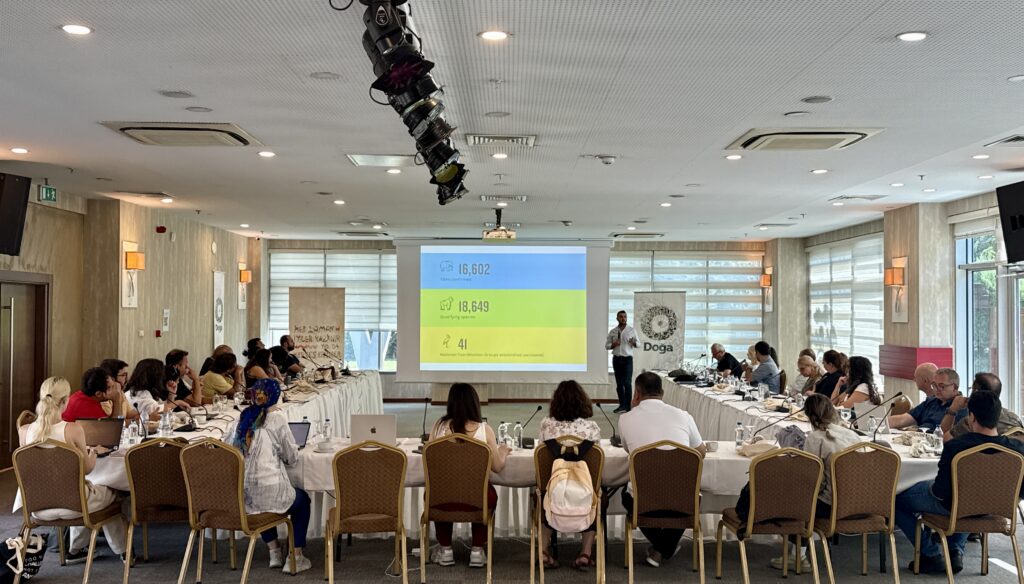
Initial results from two years of intensive research by 12 leading experts have yielded significant biodiversity insights: Amphibians & Reptiles: 61 locations (38 species) Plants & Varieties: 3,794 locations (2,333 species/varieties) Freshwater Fish: 381 locations (122 species) Butterflies: 338 locations (56 species) Damselflies & Dragonflies: 92 locations (14 species) Birds: 256 locations (42 species) Mammals: 137 locations (26 species) Molluscs: 2,083 locations (875 species)
A total of 7,144 distinct locations across 9 taxonomic groups have been mapped so far, providing an updated scientific foundation for Turkey's biodiversity baseline and global conservation planning.
A key distinction of this update is the expansion of target taxonomic groups. While plants, dragonflies/damselflies, butterflies, freshwater fish, amphibians, reptiles, mammals, and birds were retained from the original survey, molluscs have now been added. As dozens of additional interdisciplinary experts join the ongoing initiative, habitats for endemic, threatened, and sensitive species will be meticulously mapped.
Expert Team: Plants: Prof. Dr. Ahmet Emre Yaprak, Prof. Dr. Ali Kandemir, Prof. Dr. Hasan Yıldırım, Dr. Tuğkan Özdöl, Mammals: Prof. Dr. Ahmet Karataş, Expert Cem Orkun Kıraç, Reptiles & Amphibians: Prof. Dr. Kerim Çiçek, Butterflies: Dr. Evrim Karaçetin, Molluscs: Prof. Dr. Burçin Aşkım Gümüş, Damselflies & Dragonflies: Assoc. Prof. Dr. Ali Miroğlu, Freshwater Fish: Prof. Dr. Baran Yoğurtçuoğlu, Birds & Mammals: Dr. Şafak Arslan, GIS Specialists: Prof. Dr. Muhammed Zeynel Öztürk, Dr. Enes Taşoğlu, Scientific Evidence Documenting Critical Habitats in Turkey, Prof. Dr. Muhammed Zeynel Öztürk – CBS, Dr. Enes Taşoğlu – CBS.
Commenting on the workshop, Dr. Şafak Arslan, Conservation Program Coordinator at Doğa Derneği, stated:
"Held ahead of COP31, this workshop generates research that will directly shape Turkey’s policy and planning framework for conservation and climate change. The findings map out vital habitats for endemic, threatened, sensitive, and unique species. This dataset is tailored for integration into national policy, Other Effective Area-Based Conservation Measures (OECM) frameworks, and official databases in alignment with the Kunming-Montreal Global Biodiversity Framework’s 30x30 target. We aim to establish a KBA National Coordination Group to ensure transparent, multi-stakeholder, and science-based integration into national databases, aligning with international standards and the International KBA Secretariat. Upon completion in 2029, Turkey's KBA inventory will transition from a static publication into a real-time, dynamic online platform."
For More Information: Web: kbaturkiye.org
E-posta: [email protected]